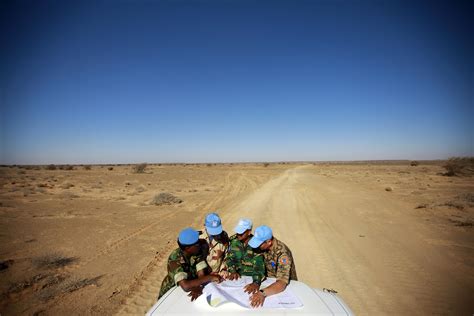
The United Nations Security Council, despite debating two competing draft resolutions tabled by the United States and Russia regarding the MINURSO mission in Western Sahara on October 30, 2026, failed to adopt either. The U.S. draft was rejected after receiving 11 votes in favor, three abstentions from China, Pakistan, and Somalia, and one veto from Russia. Russia’s alternative text fell short of the required nine-vote threshold, securing three votes in favor, one vote against from the U.S., and 11 abstentions. As of October 31, 2026, MINURSO was left without a renewed Security Council mandate.
The rift between the two drafts stems from diverging views on the settlement model. Washington sought to remove the word "referendum", a vote that has remained unimplemented for nearly 35 years, transform the mission into a political structure renamed MINUSO, and review reductions in military personnel. While preserving a reference to self-determination, the U.S. text positioned Morocco’s 2007 autonomy plan as the primary framework for negotiations. Moscow, conversely, proposed a one-year technical extension preserving the mission's current name and mandate to prevent predetermining the outcome of negotiations in Morocco's favor and to keep the principle of self-determination open. While Washington prioritizes feasibility, Moscow emphasizes procedural neutrality; yet neither text generated broad consensus. The divide in the Council hinges less on a technical extension than on which options will frame Western Sahara's future negotiations.
MINURSO was formed in Western Sahara, where Spain had withdrawn in 1975, through Resolution 690 in 1991, and its mandate was the monitoring of the ceasefire and the organization of a referendum through which the local population would decide whether to become independent or integrate with Morocco. Issues regarding voter lists, verification of identity, and eligibility have combined with mutual mistrust between Morocco and the Polisario Front to preclude the conduct of a referendum. While MINURSO failed to carry out its mandate of organizing a referendum, the mission has been successful in monitoring the ceasefire and containing the conflict. The retention of the term "referendum" in the mandate does not necessarily ensure the conduct of the vote, but dropping the term gives the impression that the commitment to self-determination is waning. It should be noted that the practical solution may not necessarily be the legitimate one.
The expiration of the mandate does not entail an immediate withdrawal of personnel, but it could cast uncertainty over ceasefire monitoring authority, logistical operations, and political engagement. Moving forward, the legal status of UN personnel, the extent to which Morocco opens its autonomy plan to genuine negotiation, and whether the Polisario Front remains in the political process will be decisive. The stance of Algeria, which views the dossier as an unfinished decolonization issue, alongside the risk of escalating low-intensity hostilities ongoing since 2020, may also mount pressure. The Council could quickly agree on a technical extension, deferring the debate over a settlement model and limiting the mandate gap; conversely, a prolonged impasse could erode trust in the UN and weaken the mission's political function. Ultimately, the core failure over Western Sahara lies not in the inability to choose between a referendum or autonomy, but in the great powers' inability to bridge their divide even for a temporary compromise that preserves stability on the ground.